
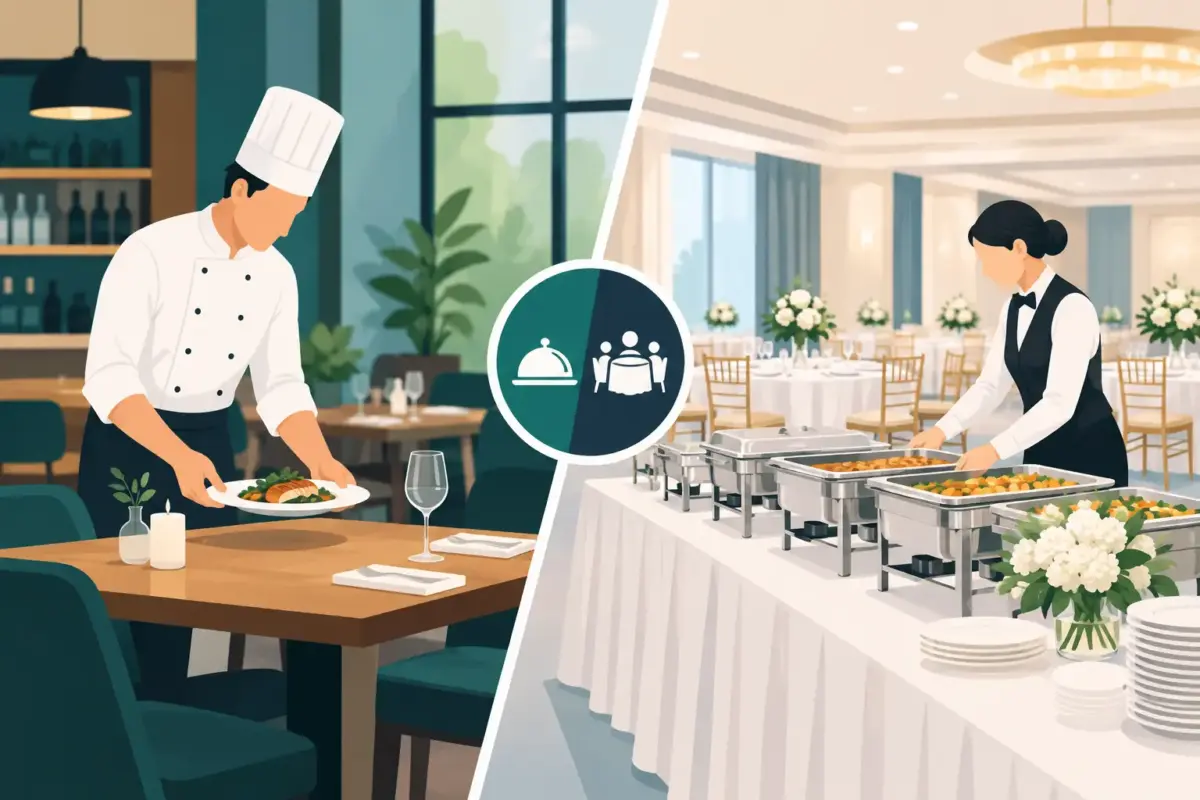
A plated entrée can arrive hot, look beautiful, and satisfy a room full of guests in either setting. The real difference in restaurant catering vs banquet catering is what happens around the meal: where guests gather, who manages the room, how the timeline flows, and how many details you want one team to handle. For a Stockton wedding, company meeting, quinceañera, memorial, or reunion, that difference can shape the entire experience.
Restaurant Catering vs Banquet Catering: The Core Difference
Restaurant catering is centered on bringing food and beverage service to an event. It may mean a delivery order for an office lunch, buffet service at a home, or a restaurant team catering a celebration at a rented venue. The menu is usually the primary focus, and the host may arrange the location, tables, decorations, rentals, and event schedule separately.
Banquet catering is designed around the full hosted event. Food remains a major part of the occasion, but it is coordinated with a dedicated event space, guest seating, service staff, room setup, bar service, timing, and often the rental items that make a gathering feel complete. It is especially well suited to events where people will be together for several hours rather than simply sharing a meal.
Neither choice is automatically better. A restaurant caterer can provide excellent food and attentive service. A banquet facility can serve restaurant-quality menus while also taking responsibility for the room and the pace of the day. The best fit depends on the kind of event you are hosting and how much coordination you want to manage yourself.
When Restaurant Catering Makes Sense
Restaurant catering is often the practical choice when you already have a location that works well for your guests. Perhaps your company has a meeting room, your family is hosting an informal backyard graduation party, or a nonprofit has secured a community space with all the tables and basics already in place. In those situations, the food may be the one major piece still missing.
It can also be a strong option for shorter, less formal events. A boxed lunch for a training session, a drop-off spread for a casual open house, or a simple buffet at an office can keep planning focused and costs straightforward. When guests are coming and going, elaborate service and a detailed event timeline may not be necessary.
The trade-off is that the host usually has more moving parts to manage. Before booking, ask who will provide serving utensils, chafing dishes, beverage stations, ice, linens, tables, chairs, trash removal, and cleanup. If alcohol is part of the plan, confirm the venue’s rules, permits, and insurance requirements well before invitations go out.
Off-site catering can be wonderfully flexible, but flexibility sometimes means more coordination. A meal that looks affordable at first may require extra rentals, staffing, delivery fees, or setup time once every detail is accounted for.
When Banquet Catering Is the Better Choice
Banquet catering shines when the event itself needs a home. Weddings, receptions, milestone birthdays, celebrations of life, showers, quinceañeras, award dinners, and holiday parties all tend to involve more than serving a meal. Guests need places to mingle, eat, toast, listen to speeches, dance, or take part in a program.
With a banquet setting, the room layout and meal service can be planned together. A team can help determine whether a plated dinner, buffet, family-style meal, or appetizers and stations will support the energy you want. They can also coordinate when food is served around a ceremony, cocktail hour, presentation, cake cutting, or first dance.
This approach is particularly valuable for hosts who do not want to spend their event checking on deliveries or directing vendors. On-site staff can reset tables, serve beverages, keep food moving, and respond when the schedule changes. That support gives the host more time to welcome guests and enjoy the reason everyone came together.
A banquet facility may also offer a more polished solution for business and community events. A meeting can move naturally from a presentation to lunch, then into networking or a reception, without asking attendees to travel to another location. For events with out-of-town guests, older relatives, or a broad mix of ages, keeping the experience in one comfortable place can make a meaningful difference.
Compare the Full Cost, Not Just the Menu Price
The food price per person is an understandable starting point, but it is not the whole budget. Restaurant catering may appear lower because it covers the meal alone. Banquet catering packages may include elements that would otherwise need to be rented or booked separately, such as the room, setup, tables, chairs, linens, glassware, service staff, and cleanup.
Ask each provider for a clear breakdown of what is included and what is optional. Find out whether pricing includes taxes, service charges, delivery, bartenders, cake cutting, room rental, audiovisual needs, and overtime. There is no single package that works for every gathering, but clear information makes it much easier to compare choices fairly.
Guest count matters, too. A small dinner for 20 may be simple to host in a private restaurant space or home. A reception for 150 guests needs a different level of kitchen capacity, service coordination, parking, restrooms, seating, and flow. The larger and more structured the occasion becomes, the more value a full-service banquet team can offer.
Think About Your Guests’ Experience
Food is remembered, but guests also remember whether they could hear the toast, find a seat, get a drink without a long wait, and relax without wondering what happens next. Restaurant catering can create a warm, personal atmosphere in a meaningful location, especially when the gathering is casual and the host has a trusted support team.
Banquet catering offers more control over the complete guest experience. The event can be arranged with accessible seating, a dedicated dance floor, space for a head table, a gift table, dessert display, or audiovisual presentation. Staff members are already familiar with the room, which can prevent the small logistical issues that distract from an otherwise special day.
For culturally significant celebrations, flexibility is especially important. Ask whether the provider can accommodate family traditions, a specific program order, outside dessert, décor, music, or menu preferences. The right partner should listen first and explain what is possible, rather than forcing every event into the same format.
Questions to Ask Before You Book
A good conversation with a caterer or venue should leave you feeling more prepared, not pressured. Start with your guest count, preferred date, budget range, and the type of experience you want guests to have. Then ask how the team handles food service, setup, staffing, beverages, and cleanup.
It is also wise to ask about timing. How early can decorators arrive? When is final guest count due? What happens if the program runs late? Can the menu accommodate vegetarian, gluten-sensitive, or other dietary needs? Clear answers to these practical questions often reveal whether a provider is equipped for the style of event you have in mind.
At Elkhorn Banquet Facility, hosts can pair food and beverage service with flexible event space for gatherings from 15 to 325 guests. That can be a helpful fit when you want restaurant-quality food, an experienced on-site team, and fewer separate vendors to coordinate.
The right choice should make your occasion feel easier to host and more enjoyable to attend. Whether you bring a favorite restaurant to your chosen location or select a banquet setting that supports the entire celebration, choose the team that listens to your plans and helps make room for the moments your guests will remember.