
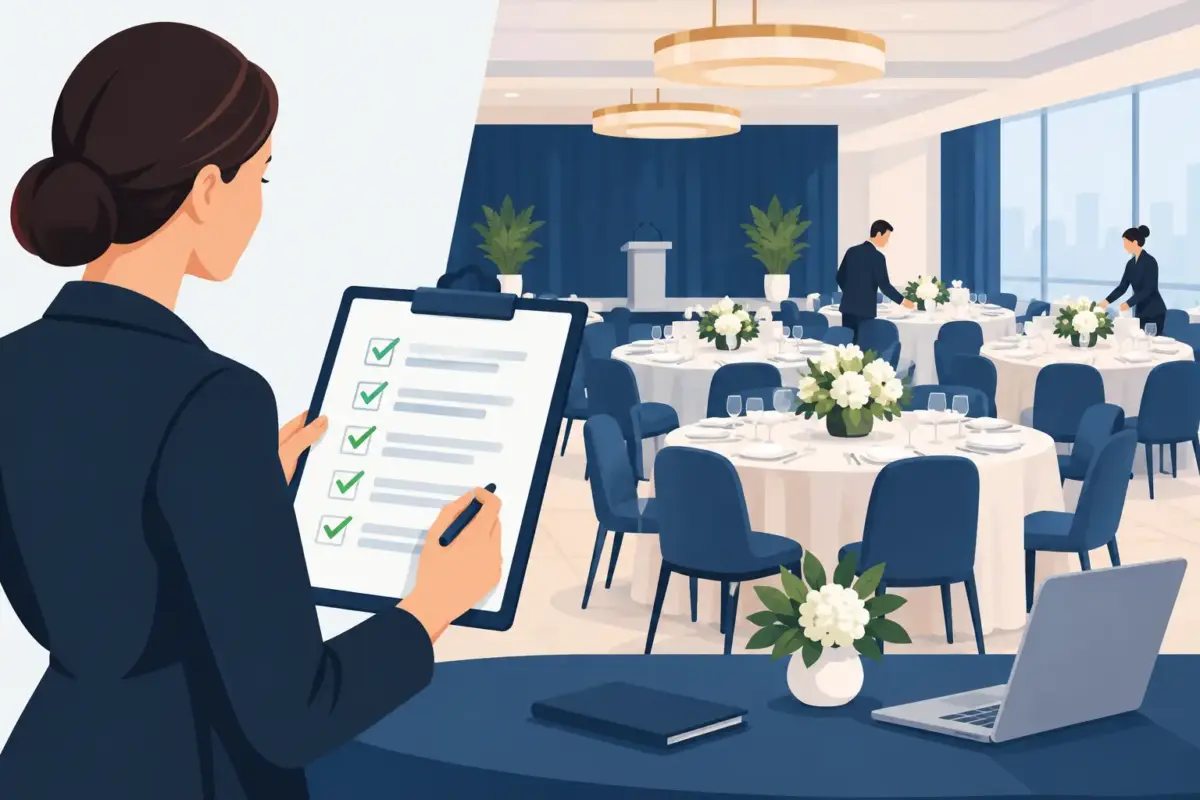
A corporate banquet is often judged before the first entrée reaches the table. Guests notice whether parking feels clear, check-in moves quickly, the room fits the crowd, and the program starts when promised. A thoughtful corporate banquet planning checklist helps your team handle those details early, so the event feels welcoming rather than rushed.
Whether you are recognizing employees, hosting clients, fundraising for a local cause, or gathering a department after a long season, the best banquet plans balance polish with practicality. The goal is not to add more moving parts. It is to make smart decisions in the right order.
Start With the Purpose, Budget, and Guest List
Before comparing menus or selecting centerpieces, decide what the banquet needs to accomplish. An annual awards dinner has different needs than a client appreciation event, leadership meeting, holiday party, or nonprofit fundraiser. Your purpose affects the schedule, food style, room layout, entertainment, and the tone of every guest communication.
Write a short event brief that answers a few essential questions: Who is attending? What should they feel when they leave? What does success look like? For one company, success may mean celebrating a milestone and strengthening morale. For another, it may be filling sponsor tables and raising funds. A clear answer keeps decisions from drifting into personal preference alone.
Set a working budget before you make commitments. Include the obvious expenses, such as room rental, catering, beverages, taxes, gratuity, décor, entertainment, photography, and awards. Also leave room for overlooked items: printed materials, name badges, audiovisual equipment, transportation, security, raffle supplies, and last-minute guest additions.
Guest count is the budget variable that changes most often. Begin with a realistic estimate, then set an RSVP deadline and a date when your final meal count is due. It is wise to plan for a small number of unexpected attendees, but ordering far beyond your expected attendance can create unnecessary food and beverage costs.
Corporate Banquet Planning Checklist: 8 to 12 Weeks Out
The earliest stage is where you secure the pieces that are hardest to replace. Popular dates, private rooms, entertainers, and key speakers can book quickly, especially around the holidays and spring fundraising season.
Use this portion of your corporate banquet planning checklist to confirm the foundation:
- Choose a date, preferred time, and one backup date that works for leadership and key guests.
- Reserve a venue that fits both your expected attendance and the experience you want to create.
- Confirm your budget range, payment schedule, cancellation terms, and final-guarantee deadline.
- Select an event format, such as plated dinner, buffet, reception, luncheon, breakfast meeting, or awards program.
- Assign one decision-maker and one day-of contact who can approve changes without delays.
- Build a guest list, identify VIPs, and decide whether guests may bring a plus-one.
- Choose a theme or level of formality that is appropriate for your organization and audience.
Capacity matters, but it is not the only venue question. Ask how the room will feel once tables, a stage, buffet stations, registration, a dance floor, or sponsor displays are included. A room that holds 200 guests for a meeting may feel crowded for a banquet with a full program. On the other hand, a large room can still feel warm with the right table placement, lighting, and décor.
For Stockton-area organizations looking to simplify vendor coordination, a full-service facility can be a practical advantage. Elkhorn Banquet Facility offers flexible halls for gatherings from 15 to 325 guests, along with food and beverage service, planning support, and professional on-site staff. That combination can reduce the number of separate details your team needs to manage.
Plan the Guest Experience, Not Just the Schedule
A banquet agenda should respect your guests’ time. If the invitation says 6:00 p.m., clarify whether that is arrival time, cocktail hour, or the beginning of dinner. A simple timeline prevents the common frustration of guests waiting too long before food or the program begins.
A dependable evening schedule often includes arrival and registration, a social period, seating, a brief welcome, meal service, the main program, recognition or remarks, and a clear closing. The exact sequence depends on your goals. If networking is the priority, allow meaningful time before dinner. If your program includes several speakers, keep remarks tight and place them between courses only if the venue service plan supports it.
Consider accessibility from the start. Reserve convenient seating for guests with mobility needs, make sure pathways remain open, and ask about accessible restrooms and parking. If presentations are central to the event, check sightlines from every table and plan for microphones that allow speakers to be heard without straining.
Registration deserves more attention than it usually receives. Have an alphabetized guest list, name badges if helpful, and enough staff or volunteers for the arrival window. For a larger group, separate check-in lines by last name or use a dedicated VIP check-in. A calm welcome sets the tone for the entire evening.
Choose Food and Beverages With Real Guests in Mind
The menu should feel generous, fit the event timing, and work for the people in the room. A hearty buffet can encourage conversation at a relaxed employee celebration, while a plated dinner may better suit a formal awards presentation or donor event. Lunches and breakfasts need efficient service because guests may be working around a business schedule.
Ask attendees about dietary needs when they RSVP, not the week of the event. Vegetarian, vegan, gluten-sensitive, dairy-free, and allergy-related requests are much easier to accommodate with notice. Share the final count and special meal needs with the venue by the required deadline, then make sure your seating plan or place cards help service staff identify those guests discreetly.
Beverage planning requires the same care. Decide whether you will host beer and wine, offer a full bar, provide drink tickets, or keep the event alcohol-free. Your choice should reflect company policy, the audience, budget, and transportation options. If alcohol is served, offer appealing nonalcoholic choices and encourage guests to arrange a safe ride home.
Do not treat a menu tasting as a formality. Use it to confirm portion sizes, presentation, pacing, and the overall fit for your event. Restaurant-quality food can be a memorable part of the evening, but timing is what protects that experience. Confirm when courses will be served and how service will work around speeches, videos, or awards.
Build a Floor Plan That Supports the Program
A banquet room works best when guests always know where to go next. Your floor plan should account for registration, dining tables, the head table or stage, buffet lines, bars, gift or raffle tables, sponsor displays, photo areas, and any entertainment setup.
Round tables encourage conversation and work well for celebrations and recognition dinners. Classroom or theater-style seating may be better for a training session with a meal break. If networking is the priority, consider high-top tables during the reception period, then transition guests to assigned dining tables for the program.
Avoid placing a loud bar, buffet line, or service station directly beside the stage. Keep aisles clear for servers and guests, and leave enough space between tables for comfortable movement. If you have a slideshow, video, or live presentation, test the screen placement and sound from the farthest seat in the room.
Confirm Technology and Program Needs
Make a written list of every technical requirement: microphones, speakers, projector, screen, laptop connection, music, podium, stage, lighting, and Wi-Fi. Then assign responsibility for each item. A speaker may bring a presentation, but someone still needs to confirm the file opens, the adapter is available, and the audio is audible.
Schedule a brief run-through before guests arrive. Test the first slide, first song, first microphone, and first video. It takes only a few minutes and can prevent the awkward pauses guests remember most.
Final Week: Confirm, Communicate, and Delegate
During the final week, the planning shifts from choices to confirmation. Reconfirm the final guest count, menu, room setup, vendor arrival times, program order, and payment details. Send the venue one complete event timeline with names and phone numbers for your main contacts.
Share a simplified version of that timeline with speakers, volunteers, and department leaders. They do not need every catering detail, but they do need to know when to arrive, where to check in, when they are speaking, and who to call if they have a question.
Prepare a small event kit with printed guest lists, extra name badges, pens, tape, scissors, extension cords if permitted, chargers, a copy of the agenda, and any awards or raffle materials. Keep the kit with the day-of contact, not in a car trunk across the parking lot.
On event day, arrive early enough to walk the room with the venue coordinator. Check table numbers, place settings, signage, stage setup, temperature, lighting, registration, and audiovisual equipment. Then let your designated contacts manage questions. When one person tries to host, troubleshoot, greet VIPs, and run the program alone, guests can feel the strain.
A successful corporate banquet does not need to be extravagant to feel special. It needs clear priorities, good food, a comfortable room, and people who know what happens next. Give yourself enough lead time to make thoughtful choices, and your guests will be free to focus on the reason they came together.