
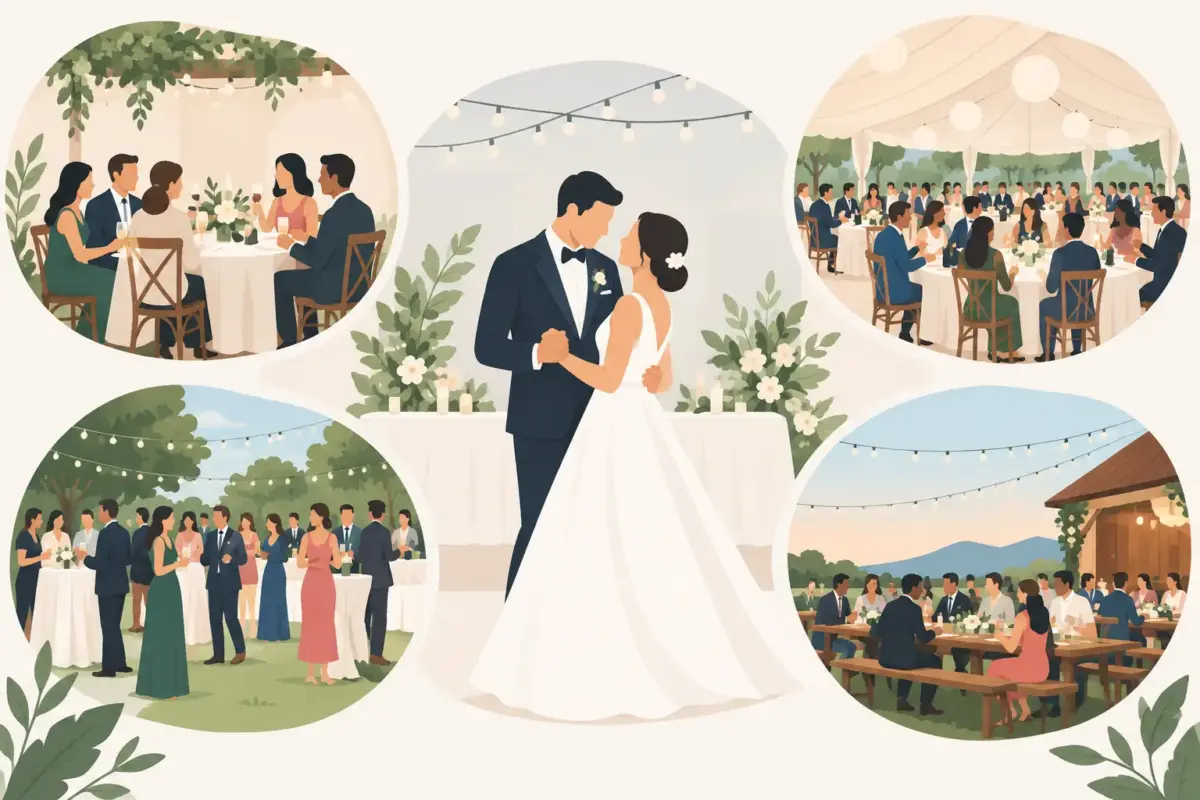
A reception is more than the meal after the ceremony. It is the first time everyone you love is gathered in one room to celebrate your marriage, and the feeling of that room matters. These wedding reception examples show how couples can create a celebration that feels personal, welcoming, and realistic for their guest count, budget, and style.
The best reception is not always the largest, most formal, or most decorated. It is the one where the schedule flows comfortably, guests are well fed, and the couple has space to enjoy the people who came to celebrate with them.
Wedding Reception Examples That Feel Like You
The intimate dinner reception
An intimate reception works beautifully for couples hosting 15 to 50 guests. Picture a warm room with one long family-style table or several round tables dressed in soft linens, simple florals, and candles. After the ceremony, guests enjoy cocktails and appetizers before sitting down to a plated dinner or generous buffet.
This format leaves room for meaningful toasts, a relaxed conversation with every guest, and a dinner that feels genuinely unhurried. Rather than packing the evening with formal traditions, a couple might share a first dance, cut a small cake, and let the night unfold over coffee, dessert, and music.
The trade-off is that a smaller guest list requires difficult decisions. Still, it can free up the budget for upgraded menu selections, a hosted bar, or details that make the evening feel especially personal.
The classic dinner-and-dancing reception
For many couples, this is the reception they have imagined for years: cocktail hour, dinner, heartfelt speeches, cake cutting, first dances, and a full dance floor. It is a familiar format for good reason. Guests understand the rhythm of the evening, and there is something special about seeing multiple generations celebrate together.
A typical timeline begins with the newlyweds taking photos while guests enjoy beverages and passed or displayed appetizers. Dinner follows, then toasts and formal dances. Once the dance floor opens, the reception becomes more relaxed. A late-night snack or dessert station can keep the energy going without adding another formal moment.
This option is ideal for guest lists in the 75 to 200 range, though it can scale up or down. The key is choosing a room layout that gives guests enough space to dine comfortably without making the dance floor feel separated from the celebration.
The cocktail-style reception
A cocktail-style reception is lively, social, and less tied to a seated dinner schedule. Guests move through the room, visit food stations, enjoy appetizers, and gather around high-top tables or lounge seating. It works especially well for an evening wedding, a shorter celebration, or a couple who would rather mingle than sit at a head table for an hour.
Food matters even more in this format. Plan enough substantial selections that guests feel they have had a true meal, not just snacks. A thoughtful mix might include hearty small plates, carving or pasta stations, fresh salads, and desserts. Clear timing also helps. If the invitation covers a traditional meal period, guests will expect satisfying food.
This reception style can feel polished without being overly formal. It is also a good choice when guests include many friend groups who will enjoy circulating and meeting one another.
The brunch wedding reception
Morning and midday weddings have their own charm. Natural light, seasonal flowers, coffee service, mimosas, and a menu with breakfast favorites can create a cheerful, relaxed gathering. Think scrambled eggs, roasted potatoes, fruit, pastries, chicken and waffles, or a made-to-order omelet station, depending on the venue and menu options.
A brunch reception often runs three to five hours, making it a practical choice for couples who want a beautiful celebration with a lower overall bar cost. It can also leave the newlyweds free to continue the celebration privately later that evening.
Because guests may not expect a late-night party after a daytime event, focus on music, conversation, and a few meaningful traditions rather than trying to recreate a midnight dance club at noon. A live acoustic musician, jazz playlist, lawn games, or a photo area can fit the mood naturally.
The elegant banquet reception
An elegant banquet reception is built around hospitality. Guests arrive to a polished space, are welcomed with drinks, and enjoy a carefully planned meal served at tables or presented through a refined buffet. The décor may include formal linens, layered place settings, elevated centerpieces, and a coordinated color palette, but the experience should still feel warm rather than stiff.
This format is a strong fit for larger guest lists, especially when family and community are central to the day. Round tables encourage conversation, while a clear stage or focal point gives toasts, dances, and cultural traditions the attention they deserve.
For larger celebrations, keep the program moving. Long gaps between courses, speeches, or dances can drain the room’s energy. An experienced event team can help coordinate dinner service, announcements, and transitions so the couple is not managing the clock on their wedding day.
Choosing a Reception Format Around Your Priorities
Before choosing décor or a menu, decide what you want guests to remember. Was it a packed dance floor? A remarkable dinner? The ease of spending time with every relative? A beautiful setting for a family tradition? There is no wrong answer, but your priority should guide the budget.
Couples who care most about food may choose a shorter reception with a plated meal, upgraded buffet, or memorable dessert display. Couples who want a party may invest in entertainment, lighting, and a schedule that gets guests dancing earlier. If meaningful conversation is the goal, an intimate dinner or brunch can offer more connection than a tightly programmed evening.
Guest count shapes nearly every decision. It affects room selection, staffing, seating, menu service, bar planning, and the amount of décor needed to make the room feel complete. A space that feels cozy for 40 people may feel crowded at 150, while a large hall needs thoughtful layout and lighting to feel inviting for a smaller wedding.
At Elkhorn Banquet Facility, couples can choose from event spaces for celebrations of 15 to 325 guests, with food and beverage service, planning support, and on-site staff available in one Stockton location. That kind of flexibility can simplify the process when your vision changes as the guest list takes shape.
Details That Make Any Reception More Welcoming
The most memorable receptions usually get the practical details right. Start with guest comfort. Make sure there is a clear welcome area, enough seating, easy access to beverages, and a schedule guests can follow without constantly asking what comes next. If older relatives are attending, consider volume levels, table placement, and timing that does not keep dinner waiting too long.
Food service should match the tone of the event. A buffet can feel generous and social, while a plated dinner can feel formal and paced. Family-style service encourages sharing, but requires enough table space. No matter which service you choose, accommodate dietary needs early so every guest has a satisfying option.
Music deserves the same attention as the menu. A DJ can guide a high-energy reception and make announcements, while a band can bring a distinctive live feel. For a quieter event, a curated playlist may be all you need. The right choice depends on whether music is the main event or a supportive backdrop.
Avoid trying to include every tradition simply because it is expected. Keep the moments that matter to you, whether that is a grand entrance, parent dances, a cultural performance, a private last dance, or a welcome toast from both families. Let go of anything that feels like an obligation.
A Simple Flow for a Comfortable Celebration
A good reception timeline gives guests a sense of occasion without making the evening feel overproduced. For a dinner-and-dancing event, allow time for arrivals and cocktails, followed by dinner, toasts, key dances, cake or dessert, and open dancing. Build in a little flexibility. Photos run long, family members arrive late, and a great toast may deserve an extra minute.
If you are hosting a smaller event, you can combine moments more naturally. Welcome everyone at dinner, invite a few toasts between courses, and move directly into dessert and dancing. The less formal the reception, the more useful it is to choose only a few anchor moments and allow conversation to do the rest.
Your reception does not have to look like anyone else’s wedding to feel complete. Choose the format that lets your guests feel cared for and lets you be present for the celebration. Years from now, the details you will remember most may be a full table, a favorite song, and the people who stayed until the last dance.