
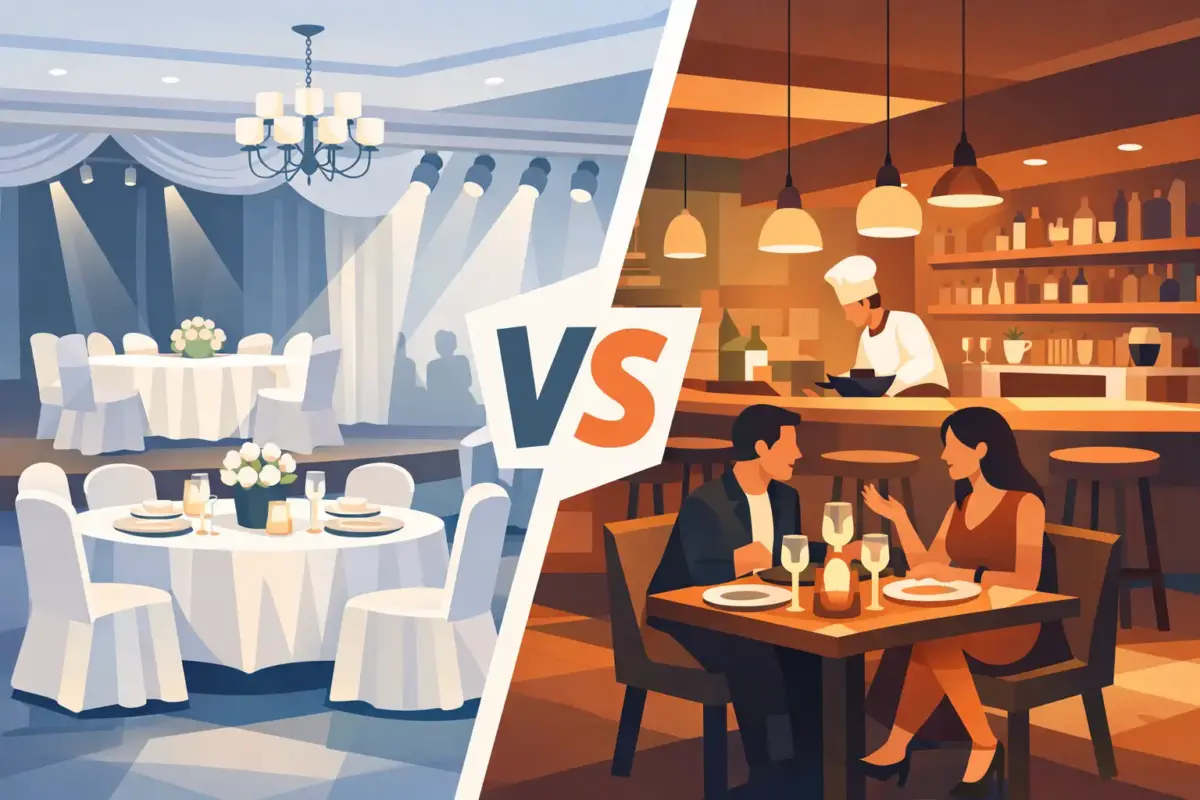
A birthday dinner for 20 and a wedding reception for 200 may both involve great food and a room full of people you care about, but they ask very different things of a venue. When weighing a banquet hall versus restaurant, the best choice comes down to more than the menu. Consider how much privacy you need, how long guests will stay, what the event needs to feel like, and how much coordination you want to handle yourself.
A restaurant can be a wonderful setting for an intimate gathering built around a meal. A banquet hall is often the better fit when the gathering needs room to breathe – with space for speeches, a dance floor, a ceremony, presentations, gift tables, family traditions, or a full day of celebration. Neither option is automatically better. The right one is the place that makes hosting feel manageable and lets your guests feel welcome from the moment they arrive.
Banquet Hall Versus Restaurant: Start With the Guest Experience
The simplest way to compare a banquet hall and a restaurant is to picture your guests’ experience from arrival through the final goodbye. Will they come in, enjoy a meal, and leave after a couple of hours? Or will they mingle, celebrate, listen to toasts, take photos, and stay for dancing or a program?
Restaurants are designed around dining. Even a private dining room usually follows the rhythm of a meal: guests are seated, courses are served, and the room turns over at a set time. That structure can make a restaurant feel easy and polished for a rehearsal dinner, retirement lunch, team dinner, or small family celebration.
A banquet facility is designed around an occasion. The room can be arranged for the event rather than asking the event to fit around regular restaurant service. That difference matters when your guest list includes several generations, when you have a cultural program or formal traditions, or when guests need space to move comfortably between dinner, speeches, and dancing.
When a restaurant is the better choice
A restaurant often makes sense for smaller groups whose main purpose is sharing a memorable meal. If you do not need a microphone, dance floor, ceremony space, custom decor, or extended event time, a reserved dining area may offer exactly the relaxed atmosphere you want.
It can also be a practical choice when guests are comfortable ordering individually or when the menu is the centerpiece of the evening. The trade-off is that flexibility may be limited. You may have fewer choices for room layout, music, decorations, start and end times, and private access to the space.
When a banquet hall is the better choice
A banquet hall is typically the stronger choice for weddings, quinceañeras, showers, reunions, celebrations of life, fundraisers, company meetings, and milestone birthdays. These events often need more than tables and dinner service. They need a welcoming arrival area, a comfortable flow for guests, space for a program, and staff who understand the schedule behind the celebration.
A dedicated hall also gives hosts more control over the feel of the room. You can create an intimate setting for a smaller group or open up a larger space for a full reception. For many families and organizations, that flexibility is what turns a gathering into an event that feels personal.
Space Is About More Than Guest Count
A venue may technically seat your number of guests while still feeling crowded, awkward, or too quiet. Before booking, think about everything that needs to fit in the room: dining tables, buffet or service stations, a head table, cake table, gift table, photo backdrop, DJ or band, dance floor, podium, and space for guests using mobility aids.
At a restaurant, the dining room layout is often established long before your event begins. Private rooms may offer some flexibility, but fixed furniture, nearby guests, and restaurant traffic can affect the experience. This is not a drawback for every event. A lively restaurant setting can be part of the appeal for a casual anniversary dinner or a post-game team meal.
At a banquet hall, room configuration is part of the planning conversation. That is especially valuable for events with a changing schedule. A room that works for a daytime baby shower may need a very different layout for an evening banquet with entertainment. Ask whether the venue has separate spaces available, what capacity is comfortable for your preferred setup, and whether outdoor areas can be part of the day.
Food and Beverage: Look Beyond the Menu
Restaurant food can be a natural draw, particularly when your guests already love the cuisine or you want an informal, order-from-the-menu experience. Still, private events often benefit from food service designed for groups. A planned banquet menu helps the kitchen serve guests together, keeps the schedule moving, and gives hosts a clearer view of food and beverage costs ahead of time.
A full-service banquet venue can offer the best of both approaches: restaurant-quality food with service structured around your event. Look for menu options that can accommodate children, vegetarian guests, food allergies, and family favorites. Ask how the venue handles appetizers, plated meals, buffets, dessert, bar service, and late-night refreshments if your celebration will run longer.
The service style matters just as much as the meal itself. A plated dinner feels formal and keeps the program on schedule. A buffet encourages guests to mingle and can give them more choice. Family-style service may feel especially warm for a close gathering. There is no universal answer, but the food plan should support the mood you want rather than interrupt it.
Compare the Full Cost, Not Just the Room Rate
A restaurant reservation can appear less expensive at first because there may be little or no venue rental fee. However, a food-and-beverage minimum, gratuity, taxes, room fees, cake-cutting fees, corkage fees, or required menu selections can change the final number. A banquet hall may have a rental fee, but it may also include tables, chairs, linens, setup, cleanup, staff support, and dedicated event time.
The most useful comparison is the total cost for the experience you want. Request a clear estimate that includes food, beverages, service charges, taxes, rentals, staffing, and any extras you expect to use. If you are comparing two options, make sure both quotes account for the same guest count, service style, event duration, and level of privacy.
Affordability does not mean choosing the least expensive line item. It means selecting a setting that reduces surprise costs and gives you what you truly need. For a large celebration, having core services coordinated through one venue can save both money and a great deal of planning energy.
Timing, Privacy, and Planning Support
Restaurants work on restaurant schedules. Your group may be assigned a dining window, and the team may be serving other guests nearby. For a simple meal, that is perfectly reasonable. For a wedding reception, memorial, awards banquet, or fundraiser, it may create pressure at the very moments when you want guests to linger.
A banquet hall generally offers more control over the timeline. You can build in time for decorating, vendor arrival, a ceremony, cocktail hour, dinner, speeches, and cleanup. Private space also gives guests room to speak freely and participate in emotional or meaningful moments without competing with the regular activity of a public dining room.
Planning support is another meaningful difference. An experienced event team can help you think through room flow, meal timing, head counts, rentals, and weather plans for outdoor portions of an event. That guidance is particularly helpful when you are hosting for the first time or coordinating a large family celebration while managing work and everyday life.
Choose a Venue That Can Meet the Moment
For Stockton-area hosts, the ideal choice may be a venue that provides both a celebratory event setting and satisfying food service in one place. Elkhorn Banquet Facility offers flexible halls for gatherings of 15 to 325 guests, along with catering, bar service, planning support, and the welcoming hospitality that helps hosts feel supported. It is a useful option when your celebration needs more room, more privacy, or more coordination than a standard restaurant reservation can provide.
Before making a decision, share the real shape of your event with the venue team: your guest count, budget range, preferred date, must-have traditions, and the moments you do not want to rush. A good venue partner will be honest about what fits, what needs adjustment, and how the day can run comfortably.
The best setting is not simply the one with the prettiest room or the lowest initial price. It is the one that gives your guests a good meal, enough room to connect, and a host who can spend the celebration making memories instead of managing details.